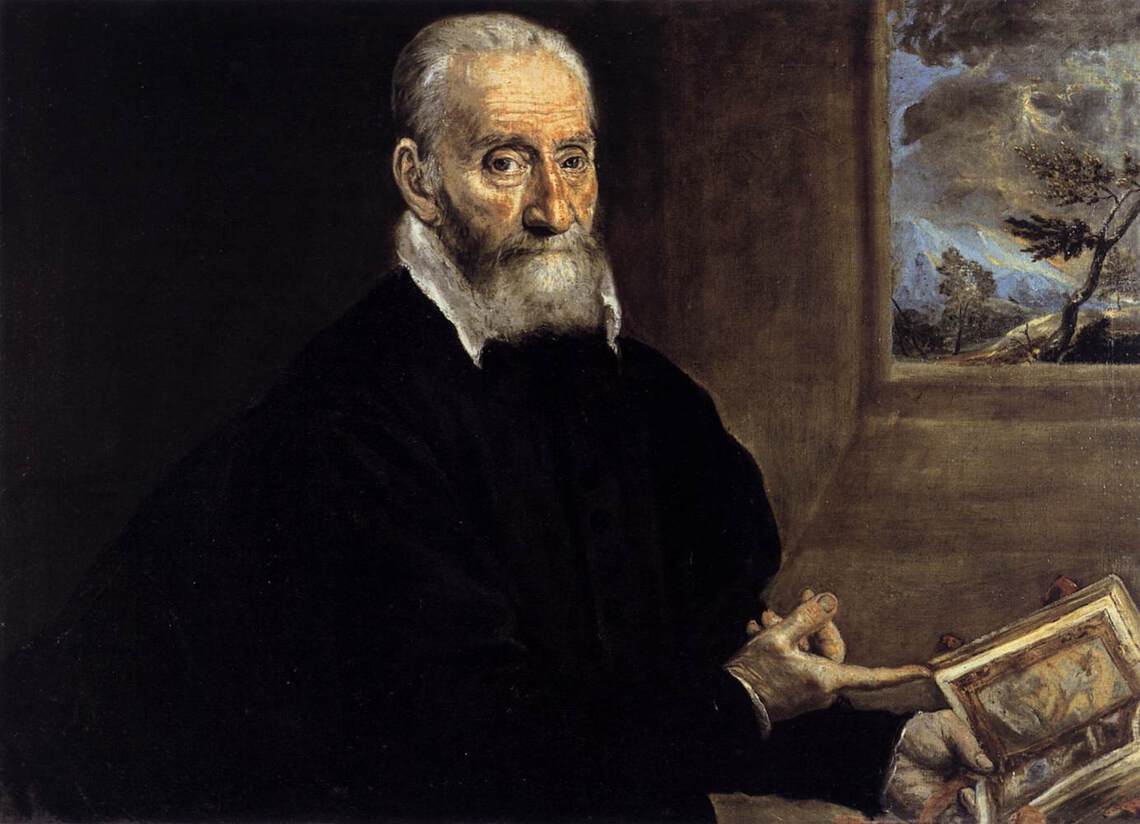
Giulio Clovio
1498–1578
PainterBorn just before the turn of the sixteenth century in Croatia , Giulio Clovio (1498-1587) is one of the most famous and accomplished miniature painters and illuminators of the Italian Renaissance. In around 1516, Clovio moved to Italy, a crucial step in launching his artistic career. He first worked in Venice, serving the Cardinal Domenico Grimani. Under Grimani’s patronage, Clovio had the opportunity to go to Rome, and it was there that he met fellow painter Giulio Romano and was exposed to other great artists of the time.
Clovio’s works marry monumental figures to a miniature scale and incorporate the level of detail usually associated with northern artists. Clovio was specifically influenced by the works of Michelangelo and Albrecht Dürer. Clovio served King Louis II and Queen Maria of Hungary, and then Cardinal Campeggio until the sack of Rome in 1527. After being taken prisoner by the troops of Charles V, Clovio escaped and fled to Padua to become a Benedictine having, according to Vasari, vowed to join a monastery if God would deliver him from the Spaniards. Clovio briefly returned to the service of Cardinal Grimani, but in 1540, he began to work for his final patron, Cardinal Alessandro Farnese. While serving Cardinal Farnese, Clovio produced what is held by many to be his great masterpiece, Farnese Hours (1546).
In 1553, Clovio briefly returned to Rome where he met Pieter Breugel. The two are thought to have collaborated on the Towneley Lectionary. Clovio returned to Florence, working under the patronage of Cardinal Farnese until Clovio’s death in 1578. Known for his miniatures, Giulio Clovio was a brilliant painter, who, according to Vasari, produced in his paintings some of the “greatest things that mortal hand could do or mortal eye could behold” (Vasari 249). Clovio’s own personal collection also contained the work of contemporary masters. His 1577 inventory includes four paintings by Pieter Bruegel, all now lost, “the View of Lyons, […] a Tower of Babel painted on ivory, a study of a tree on linen, and a miniature on which the two painters had collaborated.
By Cecily Manson